
Abbott’s infectious disease video series

The experts and science
behind our leadership

 Since 1972, Abbott has pioneered novel infectious disease diagnostic solutions when the world needs answers. We proactively address emerging needs by delivering breakthrough innovations that empower laboratories to confidently identify pathogens impacting community health, maintain safe blood supplies, and connect those diagnosed with disease to the care they need.

You are invited to step behind the scenes to get to know the experts behind these tools and the science that powers our ability to deliver confidence for today and protection for tomorrow.
Scientific breakthroughs start with people

Get to know Abbott’s
Hepatitis C expert
Dr. Gavin Cloherty

Get to know Gavin

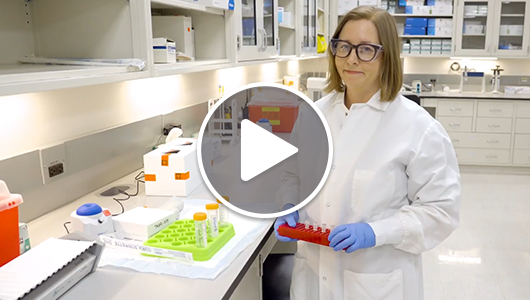
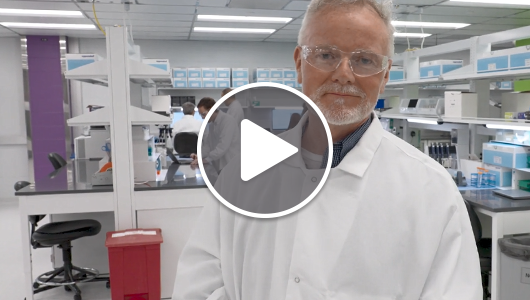
Meet Dr. Gavin Cloherty, Head of Infectious Disease Research at Abbott. With decades of experience studying HIV, viral hepatitis and other infectious diseases, Dr. Cloherty leads global efforts to develop diagnostic technologies that help change lives.

A recognized infectious disease expert, Dr. Cloherty has pioneered elimination efforts around the world, including work with Georgia's groundbreaking national hepatitis C elimination program. He also shaped the vision for the Abbott Pandemic Defense Coalition, transforming decades of surveillance experience into a first-of-its-kind global network focused on the early detection of emerging infectious disease threats.

As Abbott marks 32 years since launching the world's first industry-led surveillance program, we joined Dr. Cloherty in the lab for 32 questions, offering a closer look at the scientist, leader and person behind the work.

Get to know Abbott’s
HIV expert
Dr. Mary Rodgers  

Get to know Mary

Meet Dr. Mary Rodgers, an Abbott scientist shaping the future of infectious disease diagnostics. From discovering a new subtype of the HIV virus to serving on the frontlines of the COVID-19 pandemic response, Dr. Rodgers is redefining what scientific leadership looks like.

An HIV expert and infectious disease scientist, Dr. Rodgers helps lead the Abbott Pandemic Defense Coalition to ensure diagnostic tests remain effective against evolving virus strains. In 2019, Dr. Rodger’s co-led the discovery of a new HIV subtype, marking the first identification of a new subtype in nearly 20 years. She is a Harvard trained scientist and was recognized by Business Insider as one of its "30 Under 40 Young Leaders in Biotech."

To recognize the 40-year milestone of Abbott’s first approved HIV test, we asked her 40 questions, offering a closer look at the person behind innovations that continue to advance public health around the world.

At Abbott, confidence in diagnostic results start with insight built on unmatched access to real-world samples and data.

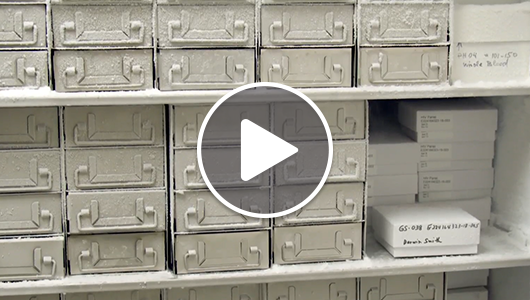
In What’s in Our Freezer, we open the door to one of the world’s most comprehensive collections of globally diverse infectious disease specimens. Because our freezers hold more than samples - they hold stories that help shape science. Each episode brings those stories to life, revealing where samples come from, why they matter, and how they help us continuously challenge and improve diagnostics in a rapidly evolving world.

The proof is in our freezers.

What’s in our freezer
Hepatitis C

What's in our freezer hepatitis c testing

The global insights behind Abbott's Hepatitis C testing

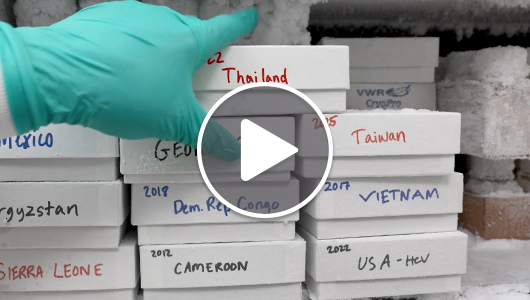
This episode highlights Abbott’s unique collection of hepatitis C samples that have been gathered from 19 countries across five continents since 1994.

What the Science Revealed

These samples help researchers understand the distribution and evolution of hepatitis C genotypes around the world. Access to a unique collection of real-world samples allows Abbott scientists to challenge assays with the genetic diversity seen in actual infections, providing confident proof of detection that cannot be achieved through theoretical analysis alone.

Strengthening Abbott's diagnostics

Maintaining one of the world’s most comprehensively diverse industry-owned sample repositories helps ensure Abbott's current and future diagnostic solutions perform confidently and consistently, regardless of where testing occurs or where an infection was acquired.

The next generation of Hepatitis C testing

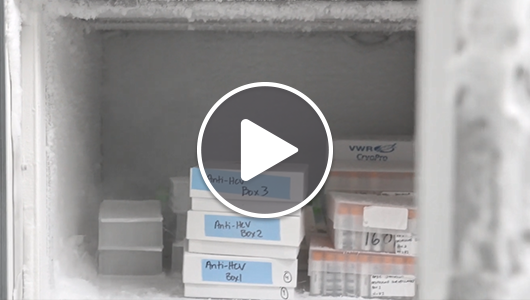
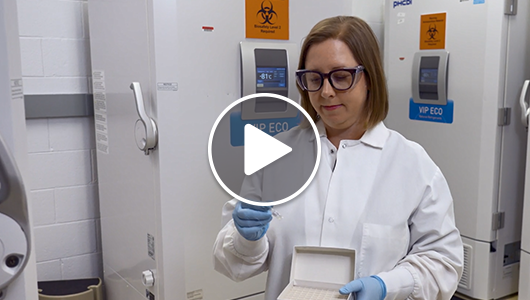
This episode explores how carefully characterized hepatitis C samples were used during development of Abbott's next-generation Anti-HCV assay. 

What the Science Revealed

Among Abbott's collection was a sample containing exceptionally low levels of hepatitis C antibodies. Even patients with very low levels of antibodies can be living with infection and seeking diagnosis. Because hepatitis C is curable, accurate detection is critical to ensuring patients are identified, connected to care, and able to access potentially life-changing treatment. 

Strengthening Abbott's diagnostics

This sample demonstrates the importance of designing tests that can reliably detect infection, even when antibody levels are low. Challenging samples like this helped ensure that Abbott's next-generation Anti-HCV assay could maintain 100% sensitivity while improving specificity, reducing the likelihood of false-positive results and increasing confidence in test performance.1

What's in our freezer - Anti HCV test
What's in our freezer - HCV Georgia Elimination Program

A proven strategy for Hepatitis C elimination

This episode features hepatitis C-positive samples collected through Abbott's collaboration with Georgia's National Center for Disease Control, a leader in the world's first national hepatitis C elimination program.

What the Science Revealed

By incorporating Abbott's HCV Antigen and Anti-HCV tests into a diagnostic algorithm, healthcare providers increased identification of positive cases and contributed to a substantial reduction in disease prevalence. 

Strengthening Abbott's diagnostics

Diagnostic strategies that streamline the path from screening to treatment can improve patient outcomes, expand access to care and accelerate progress toward hepatitis C elimination goals.

What’s in our freezer
HIV

What's in our freezer

A Rare HIV Sample

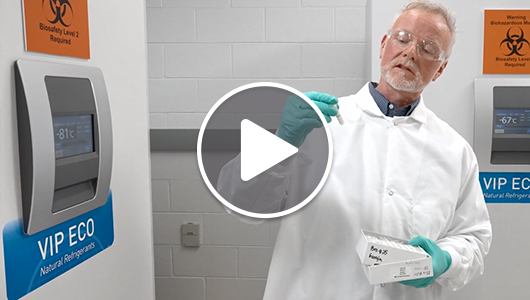
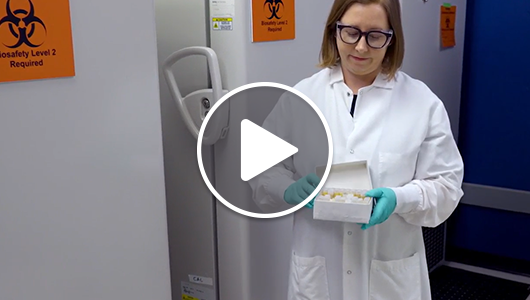
This episode takes viewers inside an Abbott freezer housing some of the rarest HIV samples in the world. Dr. Mary Rodgers introduces HIV-1 group P, an extremely divergent strain with only two documented cases globally.

What the Science Revealed

Group P was first suspected when routine diagnostic tests produced unusual and conflicting results. Further investigation led Abbott scientists to recognize and confirm we had a sample that contained this rare strain in our biorepository.

Strengthening Abbott's diagnostics

Collecting and storing HIV samples from all over the world is critical to continually challenge and validate diagnostic tests. This ensures no strain goes undetected as HIV continues to change.

Discovery of a New HIV Subtype

A sample collected through a collaborating partner in the Democratic Republic of Congo initially did not match any known HIV strain. The sample was preserved for years before technology caught up to unlock its full significance.

What the Science Revealed

Using advanced next-generation sequencing, Abbott scientists were able to fully sequence the genome and confirm it as HIV-1 group M subtype L. This marked the first newly classified HIV subtype in nearly 20 years.

Strengthening Abbott's diagnostics

The discovery highlights the importance of long-term sample preservation and sequencing expertise. Together, they help ensure diagnostics remain reliable as new viral threats can quietly emerge at any time.

What's in our freezer - Subtype L video
What's in our freezer - Triple Infection

Protecting the blood supply

This episode focuses on a routine blood donor sample from Abbott partners in Cameroon. Initial screening revealed an unexpected combination of HIV, hepatitis B, and hepatitis Delta infections.

What the Science Revealed

Comprehensive diagnostic testing uncovered the rare triple infection within a single donor. Dr. Mary Rodgers explains how accurate screening technologies make it possible to detect hidden risks in the blood supply.

Strengthening Abbott's diagnostics

Reliable pathogen detection is critical to protecting the worlds blood supply. This episode underscores how robust diagnostics help ensure donated blood remains safe for the patients and communities that rely on it. 

The power of partnerships

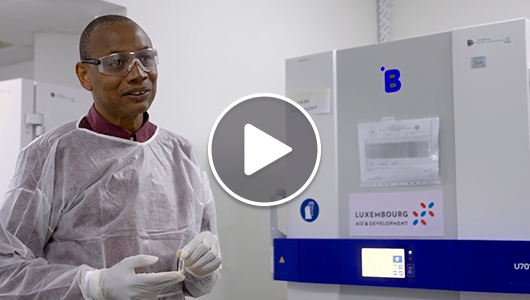
In this episode, we travel to Senegal, where Abbott collaborates with IRESSEF through the Abbott Pandemic Defense Coalition. Building on the legacy of IRESSEF founder Professor Souleymane Mboup, who helped discover HIV-2 in 1985, this team has assembled a unique collection of HIV samples spanning nearly four decades. Dr. Ambroise Ahouidi shares how hundreds of HIV-1, HIV-2 and rare co-infection specimens have been collected, preserved and shared with Abbott.

What the Science Revealed

Access to historical and geographically diverse samples allows Abbott to track how HIV has evolved and moved across populations over time. While certain strains may originate in specific regions, today's interconnected world means they can spread far beyond their traditional geographic boundaries.

Strengthening Abbott's diagnostics

Long-term surveillance and global scientific collaboration are essential to maintaining accurate diagnostics and improving care for people living with HIV around the world. These insights help Abbott design and challenge diagnostic tests that can detect a wide range of HIV variants, giving healthcare providers confidence in results no matter where a patient was exposed to the virus.

What's in our freezer - Senegal Partnerships

Abbott’s infectious disease video series

The experts and science behind our leadership

References
  1. Abbott. Anti-HCV Next Reagent Kit (AntiHCVNx) Instructions for Use. 810966R02, May 2025. Abbott; 2025.